
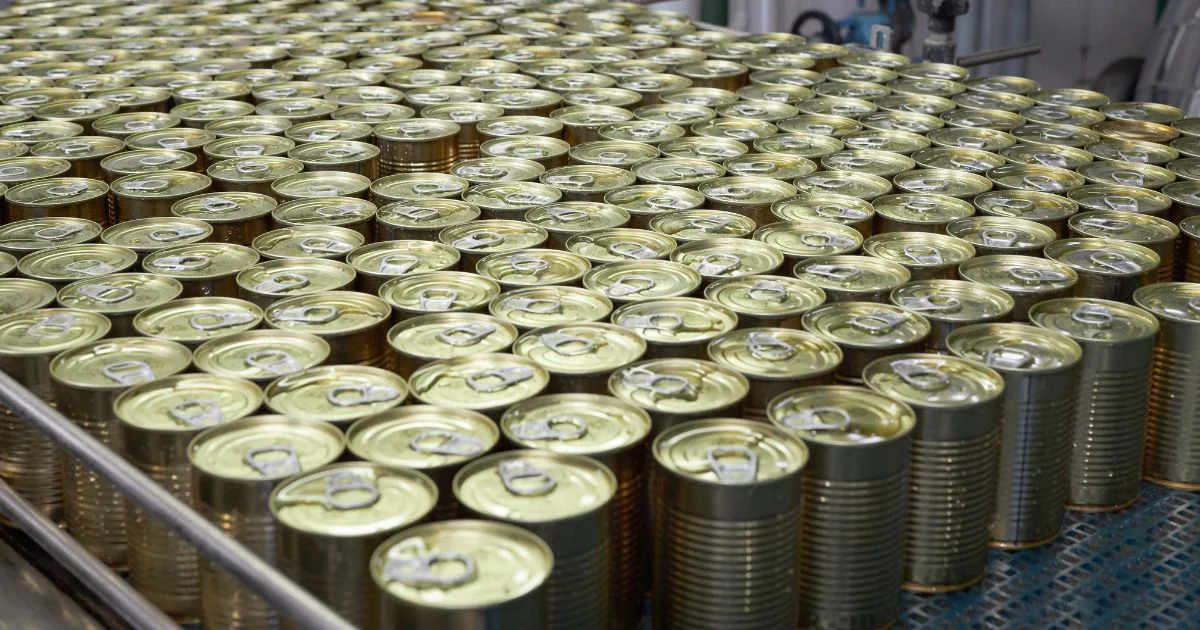
Wet cans create significant challenges on production lines. When moisture persists on container surfaces before labeling and coding, it causes a series of costly problems. The effects of moisture reach far beyond the initial wet surface.
When damp cans arrive at labeling or coding stations, quality issues appear. Your team must pull workers from regular duties to handle extra checks and fixes. These problems often appear after you've already invested time and money in filling and sealing the cans.
In our experience with beverage facilities, we've witnessed how even minimal water droplets cause smudged date codes, compromised label adhesion, and production delays that impact your bottom line.
Adding proper drying equipment at key points stops these moisture problems before they begin, which helps maintain product quality and keeps your line running smoothly.
Why Moisture on Cans Hurts Your Business
In beverage packaging operations, moisture becomes your primary adversary. When not properly managed, it creates three critical problems:
Labeling Issues: Wet cans prevent proper label adhesion. Your labels peel, wrinkle, or fall off completely. This doesn't just look unprofessional – it can lead to costly label recalls and significant production disruptions.
Inkjet Coding Problems: Moisture interferes with ink adhesion on can surfaces. Your date codes and lot information become faded, smudged, or entirely absent. This compromises product tracking and quality control. Moisture management is critical across all manufacturing processes for consistent product quality.
Production Bottlenecks: Moisture-related issues force reduced line speeds or additional manual drying processes. These bottlenecks constrain output and decrease operational efficiency. Every minute of moisture-induced downtime represents lost production and revenue.
How Air Knives Solve Your Moisture Problems
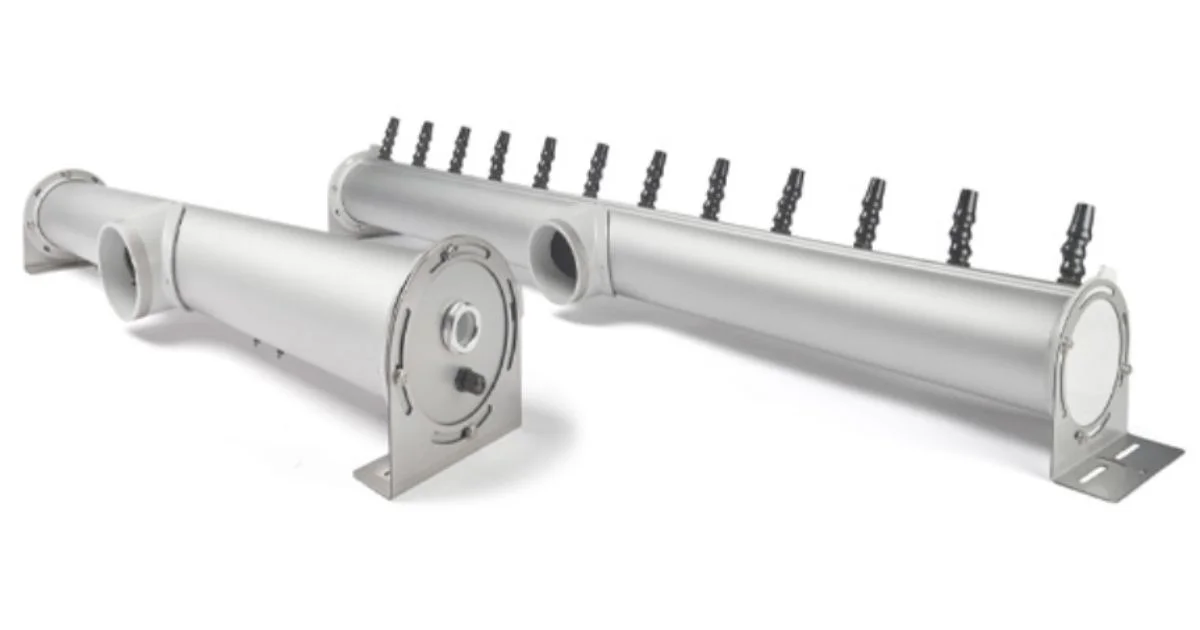
Air knives generate a thin, high-velocity sheet of air that effectively "slices" water droplets from can surfaces. This targeted airflow removes moisture efficiently without physical contact that might damage your products.
The system operates through three primary components: the air knife itself, a powerful blower unit, and connecting ductwork. Air Force 1's knives feature precisely machined slots that create uniform airflow across their entire length.
Unlike compressed air systems that waste energy through pressure drops and leaks, our engineered blower systems direct airflow precisely where needed.
Key Benefits of Air Knife Systems
Fast and Complete Drying
Air knives dry your cans in seconds, preventing adhesion problems and ink smudging. This results in fewer errors, reduced rework, and more consistent product appearance. Your cans transition seamlessly to the next production stages without delays.
Reduced Waste, Increased Profit
By removing moisture-related damage, you'll experience fewer mislabeled cans requiring rework or disposal. This reduces waste and enhances your operation's efficiency and profitability.
Enhanced Production Speeds
Air knives eliminate bottlenecks associated with traditional drying methods. Your entire line operates at higher speeds, processing more products in the same timeframe. This increases your production output and strengthens your bottom line.
Improved Product Quality
Beyond moisture removal, air knives help prevent bacterial growth that can develop with lingering moisture. This adds another dimension of quality assurance to your production process.
Today's Better Air Knife Technology
Not all air knife systems deliver equivalent results. The technology has evolved greatly over the past decade. Contemporary systems offer precision that earlier designs couldn't achieve.
Airflow Dynamics
Modern air knives create a laminar airflow pattern - meaning the air moves in parallel layers with minimal turbulence. This smooth, consistent flow proves essential for effective moisture removal. Older or poorly designed systems produce turbulent air that removes water from can surfaces less efficiently.
The slot width in an air knife represents a critical design element. Air Force 1's adjustable designs allow fine-tuning of the opening from 0.025" to 0.150" depending on your specific application. A narrower slot creates higher velocity for persistent moisture, while wider settings provide greater volume for initial water removal.
Better Blowers, Better Results
The heart of any air knife system lies in its blower. Older systems often relied on inefficient centrifugal blowers that consumed excessive power. Today's regenerative blowers provide higher pressure with improved energy efficiency. For high-speed canning lines, positive displacement blowers deliver the necessary performance without the excessive energy costs associated with compressed air.
Direct drive technology eliminates the need for belts, pulleys, and tensioners. This reduces maintenance requirements and improves reliability. With fewer moving parts, these systems operate at lower temperatures and maintain longer service lives than traditional designs.
Strategic Placement Makes All the Difference
Air knives are most effective when positioned at key points along your canning line. You can install them:
After your can washer to remove water before filling.
After filling to eliminate spills and drips.
Before labeling stations to ensure perfect adhesion and prevent costly regulatory issues.
Before inkjet coders to guarantee clear, lasting prints.
For challenging areas like can necks or bottoms, our air cannon nozzles deliver focused streams of high-velocity air. These come in sizes from 2" to 8" to accommodate your specific requirements.
The angle and distance from the can surface have a significant impact on performance. Our engineering team applies extensive field experience to determine the optimal configuration that delivers maximum drying efficiency with minimal energy consumption.
Overcoming Common Drying Challenges in Canning
Each canning operation presents unique challenges. Here's how air knife systems address the most prevalent issues:
High-Speed Lines
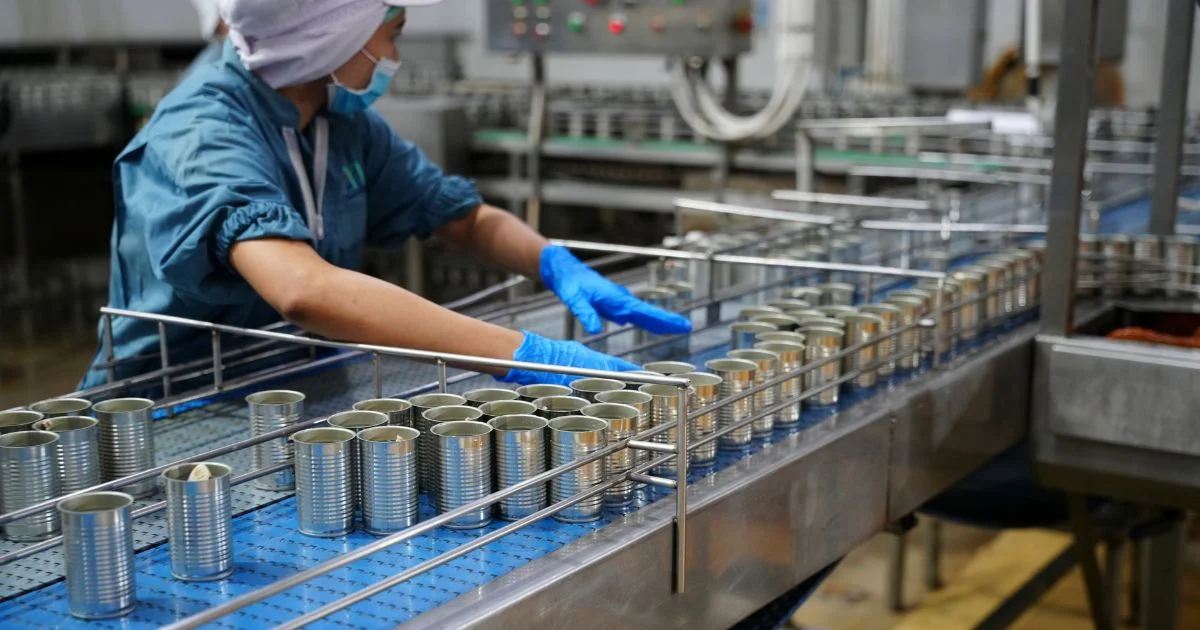
As production speeds increase, water has less time to evaporate naturally. Modern can lines operating at 1,500+ cans per minute demand powerful, precisely aimed drying systems. Air knife systems can be engineered to match your line speed, ensuring complete drying even at maximum production rates.
Multiple Can Formats
Many facilities run various can sizes on the same line. Air knife systems can incorporate quick-adjustment features that accommodate different can heights and diameters without extended changeovers. This flexibility maintains production momentum regardless of package format.
Recessed Areas
The bottom rim of a can often traps moisture that proves difficult to remove. Strategically placed air cannon nozzles can target these problem areas with concentrated airflow, ensuring complete drying even in hard-to-reach spaces.
Real Energy Savings You Can Count On
Energy efficiency represents a critical consideration when selecting drying systems. Modern air knife systems consume significantly less power than traditional compressed air methods.
Today's systems incorporate intelligent controls that adjust airflow based on production requirements. They deactivate during stoppages to conserve energy. Our high-efficiency blowers minimize power consumption while maximizing drying performance.
Air Force 1's direct drive blowers connect the motor shaft directly to the impeller. This design eliminates belts and pulleys, reducing maintenance requirements and increasing operational efficiency.
Many facilities reduce energy costs by 30-50% by transitioning from compressed air to engineered blower systems. These savings impact both operating expenses and environmental footprint. Reduced power consumption also supports sustainability initiatives, which are increasingly important to consumers and regulatory bodies.
ROI Analysis
The investment in a properly designed air knife system typically pays for itself in 6-18 months through:
Reduced energy consumption compared to compressed air.
Less product waste from labeling and coding errors.
Increased production throughput.
Decreased maintenance and downtime.
Lower labor costs for rework and quality control.
This payback timeline aligns with real-world industrial system upgrades. For example, similar compressed air system improvements have shown payback periods under three years, even for substantial facility upgrades. The return on investment becomes even more favorable for targeted applications, such as can drying systems, which directly impact production quality and throughput.
Choosing the Right System
When evaluating an air knife system for your canning line, consider these key factors:
Can Dimensions and Line Speed: Our air knives range in length from 6" to 240" or more, with adjustable apertures to accommodate various can sizes and production speeds.
Mounting Requirements: We provide flanges, brackets, and clamps for precise positioning along your production line.
Material Specifications: For food and beverage production, we provide stainless steel components that meet stringent hygiene standards and regulatory requirements.
Acoustic Considerations: Our contemporary systems operate quietly, maintaining a comfortable working environment while ensuring production efficiency.
Why Choose Air Force 1
At Air Force 1, we design, manufacture, and install custom blow off systems utilizing our proprietary air knives, patented air cannons, and direct-drive blowers. Our team develops solutions that consistently exceed expectations for both small-scale and extensive projects.
Our process begins with an on-site consultation to understand your specific requirements. We utilize your drawings, video documentation, and production data to define the project parameters. Our engineers collaborate with you from initial concept through final installation.
Our air knives are constructed from stainless steel or hard-anodized aluminum. With adjustable slots for precise control and lengths from 6" to beyond 240", we can engineer the ideal system for your specific application.
Taking the Next Step Toward Moisture-Free Production
Moisture on cans before labeling and coding doesn't have to compromise your production efficiency. The solution remains straightforward: properly dried cans ensure superior label adhesion and code quality, which prevents downstream complications.
Whether you're processing beverages or packaging food products, efficient air knife systems maintain production momentum and quality standards. Air Force 1 brings extensive experience to address your specific challenges. We understand that every production line presents unique requirements, and we'll help you achieve the consistent quality your customers expect.
Contact us today to eliminate moisture-related issues in your canning line and explore how our custom air knife solutions can enhance your production process.