
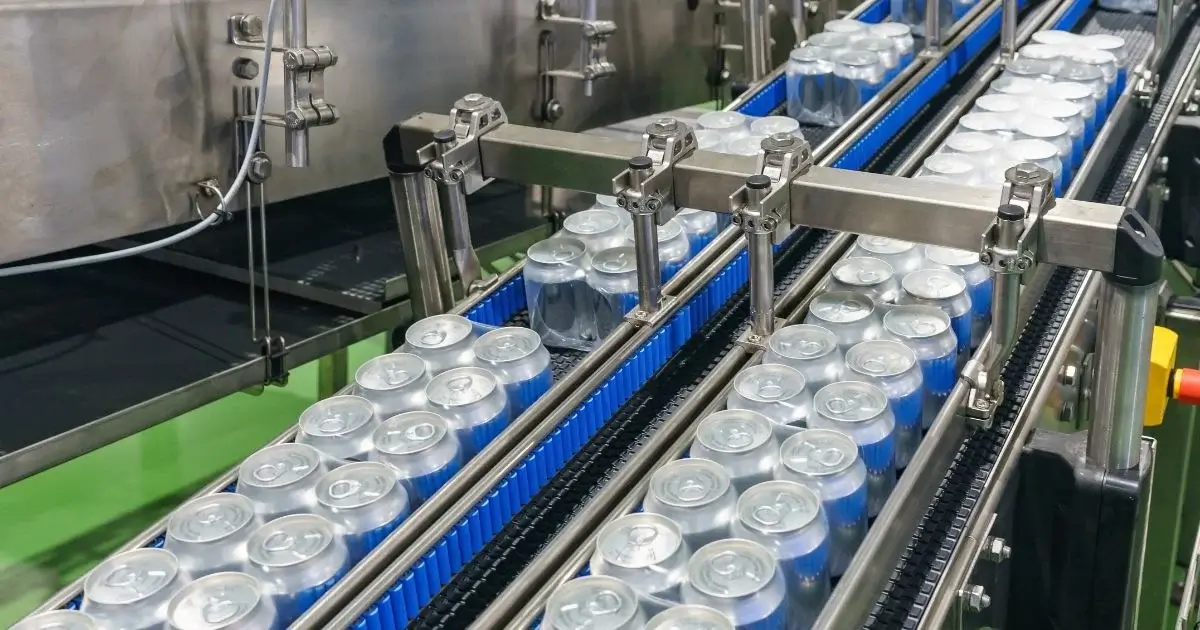
The labeler gets blamed first, because that is where the defect is visible. Adhesion fails on a percentage of containers, so the label supplier gets called and the applicator gets rebuilt, and the failure rate barely moves. Nobody looks four stations upstream at the blow off. Parts come off it dry, and dry enough on most of them has been passing inspection long enough that nobody treats it as a variable anymore.
The Applicator Gets Rebuilt Twice
A blow off station has no output that anyone measures. The labeler has a reject rate, the coating booth has a defect log, and the filler has a fill-weight chart. The blow off has only a running blower and an assumption behind it. When something goes wrong two stations later, the equipment with a number attached to it is the equipment that gets investigated, because that is where the documentation already exists.
The assumption survives casual inspection, because the parts really are dry at the spot where somebody reached in and grabbed one, which is almost always the middle of the belt at a comfortable working height. The far edge of the conveyor never makes it into the sample, and neither does the tallest configuration in the mix.
So, the investigation stays where the defect is visible, and an applicator rebuilt twice for a problem it never causes takes maintenance hours, spare parts, and line time with it. The second rebuild usually gets authorized because the first one appeared to help for a few days, which is the most expensive kind of coincidence a maintenance department can encounter.
What the rebuild did was coincide with something else, whether that was a product changeover, a cooler week, or a shift where the compressor room was running lighter. A uniform blow off system would have eliminated the variable altogether instead of relocating it. Nobody was looking at the blow off, because the blow off was not the thing with the reject rate.
Uniform Is a Property of the Line, Not the Part
Conveyor blow off coverage is a two-dimensional problem that gets specified as a one-dimensional one. Width appears on the drawing, and the knife spans the belt, so coverage gets treated as settled, but the drawing cannot demonstrate whether air at the outer edge performs the same work as air at the center.
Part geometry divides the same way, because a flat panel and a bracket with a recessed pocket can share a conveyor and share a station. They will still come out of the station differently, and the system is not actually failing on either one. It was matched to a part, and the production mix changed underneath it without anyone revisiting the original specification.
Height variation does the same thing. A tall part and a short part on the same belt do not present their surfaces to the air in the same way, so a configuration commissioned around the average part will underperform at both extremes. And the tallest item in the mix is rarely the one anybody inspects.
Time is the third axis, and the one that gets missed most. A line can dry everything correctly at seven in the morning and miss a percentage at two in the afternoon. That is inconsistent drying across parts, tracking something that varies through the day rather than something that varies across the equipment. On most plants, that variation originates in the compressed air system.
Turning It Up Buries the Evidence
The standard response to a weak position is more air everywhere. Somebody calls the compressor room, the pressure goes up until the application performs acceptably, and the phone stops ringing. One compressed air auditor calls this a minimum acceptable standards approach. It compensates for the problem instead of investigating what changed in the process, and it works often enough that it becomes the default response.
The cost is easy to miss and difficult to reverse, because every additional psi of system pressure adds roughly half a percent to the compressor's horsepower running online. That increase also raises consumption at every unregulated user in the plant, including leaks and open blows that nobody has budgeted for.
There is no documentation of it either, because a pressure change made over the phone on a Tuesday afternoon does not appear in a maintenance log or a change order. It does not appear anywhere an engineer would look a year later, while working out why the compressed air bill climbed.
And the adjustment never actually made the blow off uniform, although the weak position improved and stopped generating complaints. Every other position started running harder than the process needs, and the gap between them did not change.
Your Air Source Decides Whether a Uniform Blow Off System Is Possible
Compressed air reaches a blow off station through a header shared with everything else in the building, so what it delivers changes continuously as plant demand changes. Auditors at one plastic extrusion plant found that holding stable flow at the blow off lines was difficult, because system pressure fluctuations were affecting the flow. Operators were correcting for it by hand.
Operators adjusting valves is the visible symptom of a system that cannot hold its own output. It also means the setting depends on which operator is working, and on what else in the plant is running. Neither of those conditions should be deciding whether a part arrives at the labeler dry enough to accept adhesive.
The symptom of an uneven airflow blow off system is rarely a wet part sitting in front of somebody. It is a reject rate that will not come down at a station that keeps getting rebuilt.
Underneath all of it sits a mechanical fact that has nothing to do with power. The blow off is performed by the mass of air crossing the surface, and that mass comes from volume, while pressure mostly influences thrust at the nozzle exit, where it dissipates quickly with distance. A higher volume at lower thrust often outperforms the higher-thrust alternative on the same part.
A narrow high-pressure jet does impressive work directly under itself, and much less a short distance to either side, which is uniform for exactly one point on the part. Across a narrow container, a row of those jets is close enough to continuous that nobody notices the spaces. Across a wide panel, the same row leaves stripes that surface as streaking, or as a coating defect further down the line.
Where Coverage Is Won or Lost
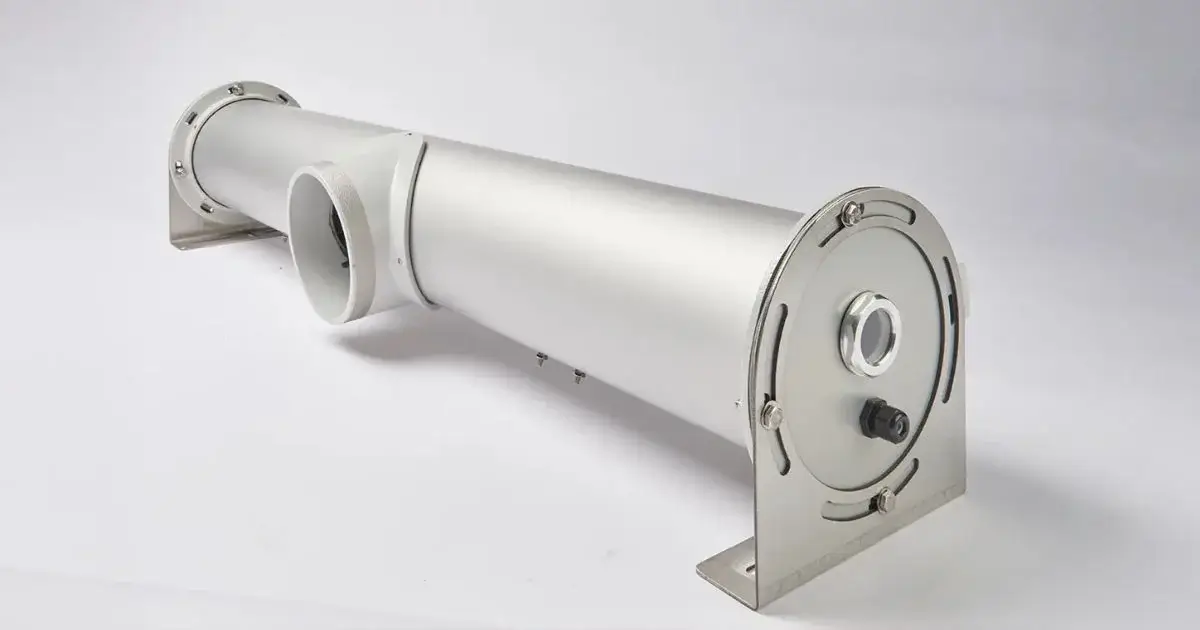
Length is where most systems quietly give it away. A short air knife fed from one inlet holds its profile without much difficulty, and the same approach stretched across a wide line does not, which is why longer units get fed through multiple inlets. That is what keeps uniform air distribution from one end to the other.
That is also the practical argument for a custom air knife system over a catalog length. Sizing to the nearest available unit leaves part of the belt outside the coverage, and the alternative is overlapping two knives and accepting whatever happens where they meet. The seam is usually where the defect pattern lives.
The blower carries the other half, because a blower matched to the knife it feeds delivers a volume that does not move with plant demand. The coverage a line had at commissioning is the coverage it still has two years later, without anybody adjusting anything to keep it there.
Line speed is the variable that ends this arrangement quietly, because a system specified for one belt speed has less contact time at a faster one. The positions that were already marginal are the positions that fail first. That is why the complaint so often starts within a month of a throughput increase that nobody connected to the blow off.
A speed change is also when the whole arrangement gets discovered, because a line running faster does not develop a new weak position. It exposes the one that has been there since the day the system went in.
Change What Gets Written Down
None of these require new equipment to be diagnosed. It needs the reject log to record conveyor position alongside the existing time and quantity information. It also needs the part number running when the rejects appeared. A pattern that looks random against the clock often turns out to be perfectly ordered against position on the belt.
Sample from the edges, and from the tallest part in the mix, rather than the convenient one. Find out whether anyone has raised system pressure at any point, and whether it ever came back down. If the rejects cluster at one edge, on one part number, or in one stretch of the day, the blow off is not undersized. It is uneven, and more air will bury that unevenness rather than remove it.
Then log the same measurement again after whatever gets changed, because a blow off problem that improves for a week and comes back has been compensated for rather than corrected. Two records of the same measurement, taken the same way, are the only reliable way to tell those two outcomes apart. Label adhesion is worth tracing back to surface preparation on this basis, before the applicator comes apart a second time.
Bring us the pattern once you have it, or talk to our team before you go looking. We can tell you what the line is doing across every position, instead of at the one part somebody happened to pull.