

You requested a quote for a blow-off system. It came back higher than you expected. Or you requested it six months ago and just got told the price has changed. Either way, you're trying to figure out how much of that is the tariff environment and how much is just the supplier.
It's a fair question. Steel and aluminum tariffs have shifted significantly since 2025, and April 2026 restructuring extended coverage in ways that affect industrial equipment directly. But whether those changes hit your blow off system cost depends on something most facilities aren't factoring in. Where does your equipment actually get built?
Why Tariff Exposure Isn't the Same for Every Supplier
A facility sourcing a blow off system from a North American manufacturer with in-house fabrication faces a different cost structure. Buying from a catalog supplier whose blowers and air knives are made overseas is a different situation entirely.
Broad tariff uncertainty has increased input costs across US industries, with sectors that import intermediate goods carrying disproportionately large exposure. Equipment sourced from overseas and imported into the US falls into that category. The cost doesn't always show up as a line item. Sometimes it shows up as a price increase that lands with your next quote, with no explanation attached. Sometimes it shows up as a lead time that quietly doubles while your installation date stays fixed.
North American manufacturers building in their own facilities don't carry that same import exposure. Their material costs are affected by domestic steel and aluminum prices, which have risen. But they're not absorbing import tariffs on finished equipment cleared through customs. That's a real difference in blow-off system price stability when you're budgeting over a multi-month project.
What's In Your System That Tariffs Actually Touch
Air knives, blower housings, ductwork, enclosures, mounting hardware, and nozzle bodies are the structural core of a blow-off system. Most of them are steel and aluminum, stainless for food and pharma, and anodized aluminum for general manufacturing. Both fall under active Section 232 tariff coverage, and both have been subject to the tariff increases that came into effect in 2025 and 2026.
For an overseas supplier, those materials are either imported raw and fabricated locally, or the finished components are imported directly. Either path carries tariff exposure somewhere in the chain. That cost eventually lands somewhere, and in most cases, it lands in your quote. What you won't always see is how much gets absorbed versus passed through.
Domestic fabricators sourcing North American steel and aluminum work with material that carries a substantially lower tariff rate than imported goods. It doesn't eliminate cost pressure, but it puts domestic manufacturers in a different position than importers. The gap between what they pay for materials and what an overseas supplier pays for the same volume is real, and it shows up in quote stability over time.
The Blow Off System Cost Question Nobody Asks Upfront
Most facilities approach blow off system cost as a single number: the quote. What gets missed is whether that number holds between initial conversation and purchase order. And whether the supplier can see their own cost exposure clearly.
Suppliers with overseas manufacturing often don't have clear visibility into how their import costs will shift quarter to quarter. That uncertainty gets managed through price escalation clauses or revised quotes. Sometimes lead times just stretch while they wait on overseas fabricators. You've seen this in other capital equipment categories. It shows up in blow off the same way.
A manufacturer building in-house controls that differently. They know their material costs and their labor costs. They're not waiting on container schedules or customs clearance to give you a firm delivery date. For projects with hard installation timelines, that matters more than a nominal price difference.
How In-House North American Manufacturing Changes the Calculation
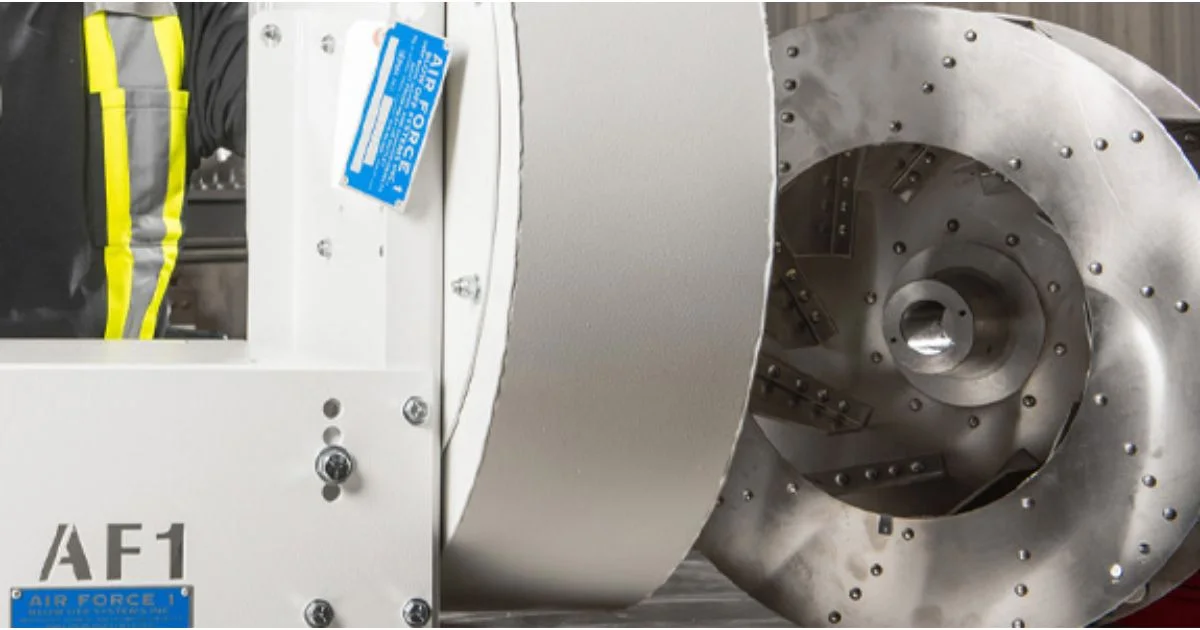
AF1 builds in a 20,000-square-foot North American manufacturing facility. CNC laser cutters, plasma cutters, press brakes, welding equipment: all of it on-site. Air knives from 6" to 240"+, direct drive blowers, air cannon nozzles, and complete system assemblies. The people quoting your project work in the same building where it gets built and tested.
That setup doesn't eliminate material cost pressure. Domestic steel and aluminum prices have increased alongside tariff-driven market shifts. But it does isolate AF1's pricing from the import exposure that affects overseas-sourced equipment. When you get a quote, it reflects actual manufacturing costs on North American inputs, not a buffer built around uncertain import tariff exposure.
We've covered this in detail in our piece on why in-house blow-off manufacturing matters for your lead times. The practical effect shows up most when projects need custom configurations or face tight delivery windows. Those are exactly the conditions where overseas supply chains break down.
The Energy Equation Still Runs in Your Favor
Tariff-driven cost pressure on capital equipment is real, but it's a one-time factor. The operating cost comparison between blower-based and compressed air systems still favors blower-driven blow off. That math doesn't change with tariffs. A facility that delays a conversion because the equipment quote came in higher is still paying compressed air rates every shift. Those rates won't adjust down when the tariff environment eventually settles.
Compressed air systems commonly lose 20-30% of generated air through leaks and inefficiencies. Running compressed air for blow off can cost 7-8 times more than blower-driven air for the same performance. When you're looking at total blow off system cost, the operating difference over two or three years typically dwarfs the capital equipment price. Tariff-related increases are real, but they don't change which technology costs less to run.
For facilities on compressed air weighing whether now is the right time to convert, the tariff question is real but secondary. The hidden costs of compressed air blow off systems, including maintenance, contamination risk, energy waste, and floor space, keep adding up regardless of the equipment market. Delaying a conversion doesn't save money on those costs. It just pushes back to the point where the operating savings kick in.
Questions Worth Asking Before You Commit
Tariff exposure is something you can assess before issuing a purchase order. These questions put you in a better position when evaluating suppliers.
Where is the equipment actually manufactured? Not where the company is headquartered, but where does fabrication happen. There's a real difference between a North American address and North American manufacturing. A supplier ordering from overseas and reselling domestically carries import exposure the same way any importer does.
What's in your lead time quote, and what can change it? An overseas manufacturer quoting eight to twelve weeks has container schedules and customs clearance built into that number. Delays at either point push your installation date, not theirs. A domestic fabricator quoting the same window controls it directly. If a production deadline matters, these aren't equivalent commitments.
How are material costs handled if the market shifts? Some suppliers quote firm prices. Others include escalation provisions that let them revise before delivery. Knowing which you're dealing with before you sign a purchase order avoids a difficult conversation after it.
Can you document where the steel and aluminum in this system came from? For facilities with procurement compliance requirements, traceability from material origin to finished component is something you may need to show. A manufacturer who fabricates in-house and sources domestically can answer that directly. A reseller moving imported equipment often can't tell you where the metal in their supplier's housings originated.
What This Means for Your Project Timeline
The tariff environment that started shifting in 2025 is still evolving. There are reduced rates for certain industrial equipment running through 2027, but the underlying rates on steel and aluminum continue.
According to the AGC's tariff resource center, the situation is still changing, with their page last updated in May 2026 and continuing to be revised. Procurement teams building budgets for this year and next are working against a less predictable cost baseline than they had two or three years ago.
What that argues for is reducing supply chain exposure where you can. Sourcing blow off equipment from a North American manufacturer with genuine in-house fabrication doesn't eliminate cost pressure entirely. But it cuts the number of variables you can't control. Import tariffs, container delays, overseas production schedules: those go away when manufacturing is domestic.
For facilities already tracking signs of inefficiency in their current drying and blow off processes, the tariff conversation adds another reason to act. The costs of running an underperforming system keep adding up while procurement decisions get deferred. The equipment will cost what it costs. But production losses and energy waste from a system that isn't working don't pause while you wait.
Sourcing During a Period of Cost Uncertainty
Tariffs affect equipment pricing. But the facilities that handle this well aren't the ones waiting for the environment to settle. They're the ones shortening their supply chains and asking better questions before they commit. When you know your supplier's cost exposure, you can make a more informed decision about timing, configuration, and total project cost, rather than finding out after a purchase order what you should have asked up front.
If you're evaluating blow off system cost right now and want to know how AF1's North American manufacturing affects your exposure, contact us. We'll walk through where your project stands and what the actual cost picture looks like.