
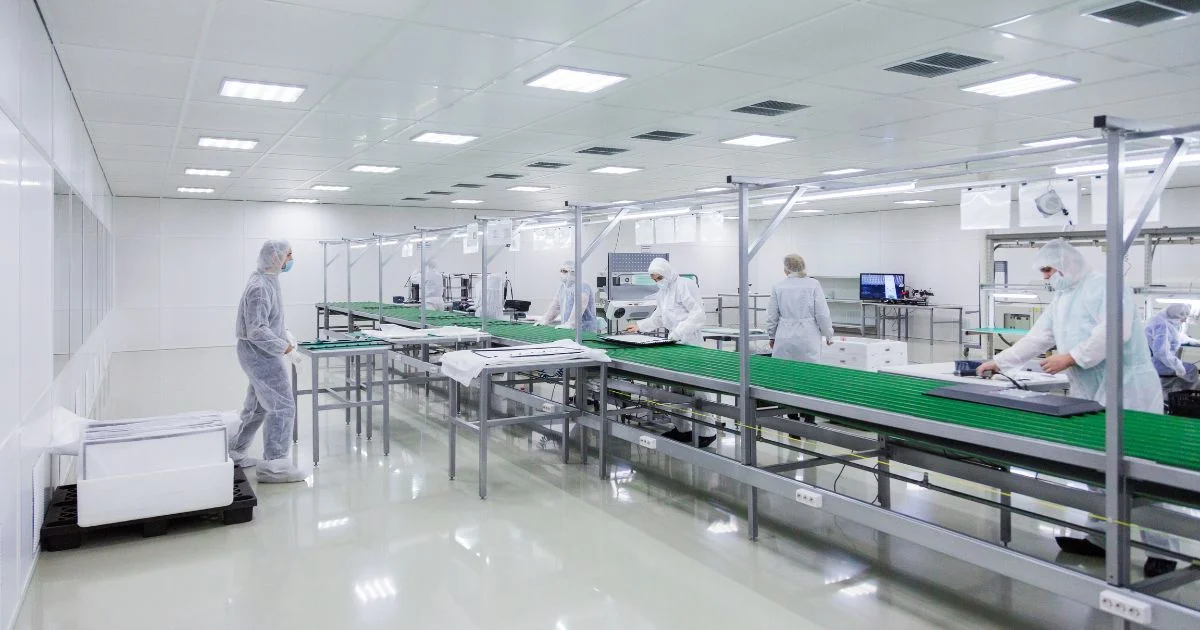
Most facilities don't question their cleaning station until a defect shows up downstream. By then, the cause is two stations back, and the part has already moved on. That's what makes surface contamination different from most production problems. You don't see it where it happens, and by the time you do, the damage is already done.
When we talk to engineers about delicate surface cleaning in manufacturing, the conversation usually starts the same way. The current system seems fine. Air is blowing, parts are moving, nothing is obviously wrong. But first-pass yield tells a different story, and that gap between what the system looks like it's doing and what it's actually doing is where most contamination problems live.
Feather duster blow off systems exist because air alone doesn't solve the whole problem. They're not a replacement for blow off, but rather a solution that comes about when you think about the cleaning problem more carefully.
Why Air Alone Falls Short on Sensitive Surfaces
High-velocity air moves particles that are already loose. What it doesn't do well is lift particles that have settled, are lightly bonded by static charge, or are fine enough that turbulent airflow pushes them sideways rather than away. On coated panels, polished metals, printed surfaces, or thin films, aggressive airflow can worsen contamination, not improve it.
The usual response when a cleaning system underperforms is to crank up the pressure. We've seen this many times. The thinking makes sense; if it's not clean enough, try harder. But on sensitive surfaces, more force creates new problems: scratches, surface deformation, particles driven into features instead of off them. The actual fix isn't more force. A different sequence is what's needed.
What a Hybrid Cleaning System Does
Feather duster blow off systems work in two distinct steps. Feather rollers make gentle contact with the surface and physically lift particles like dust, fibers, and fine debris that air alone would push around. A laminar air knife follows immediately, sweeping the loosened particles away before they can resettle. Lift first, clear second. Each step depends on the other being there.
The laminar part of laminar air knife cleaning matters more than most people expect. Laminar flow moves in smooth, controlled layers rather than turbulent bursts. It carries particles away from the surface consistently, without scattering them into adjacent areas or driving them into recesses.
That controlled airflow is what makes the clearing step complete rather than partial, and it's the mechanic that closes the gap between a system that looks like it's working and one that actually is.
Where These Systems Earn Their Place
Electronics is the clearest application. Circuit boards, sensors, and display components are sensitive to particles that won't cause a visible problem until testing — sometimes not until they reach the customer. Static control blow off matters here as much as the cleaning itself, because compressed air generates charge as it moves through hoses and nozzles.
A system that cleans and ionizes simultaneously removes particles and eliminates the charge that would attract new ones. Facilities running sensitive electronics lines often find that contamination rates don't drop as much as expected after switching cleaning methods, and static is usually the reason. The cleaning step removed the particles, but the surface remained primed to pull in new ones before the next process stage.
Automotive finishing encounters the same problem from a different angle. Paint panels and trim pieces need to be clean before coating, and a missed particle doesn't show up until after the clear coat is down. At that point, it's rework, and rework on a paint line is expensive in labor, time, and material.
Pre-paint contamination removal is one of the highest-value applications for a hybrid system because the cost of getting it wrong is visible in every defective panel that comes off the line. The feather rollers lift surface particles that settle after sanding or handling, exactly the kind that a compressed air blast moves around but doesn't consistently clear.
Packaging and printing lines deal with contamination differently. Dust on a label surface affects adhesion; dust on a print surface affects ink transfer. Neither failure is catastrophic the way an electronics short or a paint defect is, but both show up at the customer.
Labels that peel early or print that smears are warranty and relationship problems. Tracing them back to a cleaning gap that's been running for months is a frustrating conversation nobody wants to have with a key account. The cleaning station rarely gets blamed first, but it should be the first place checked.
What these applications share is that the cost of contamination is downstream and delayed. Dust contamination on production lines rarely gets traced back to the cleaning station on the first pass. The station looks fine. The problem materializes somewhere else, and by the time it's connected back to the source, a lot of product has moved through the same gap.
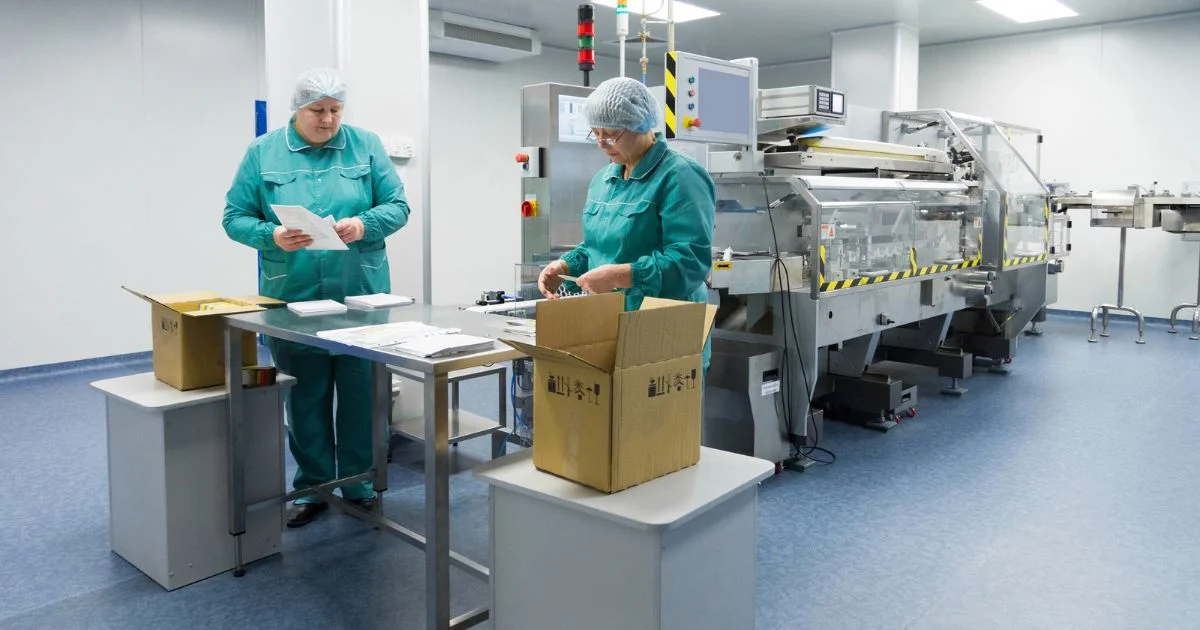
The Compressed Air Problem Hiding Inside Some Cleaning
Setups
Some facilities run their cleaning stations on compressed air rather than blower-driven systems. For low-frequency or short-burst applications, that can make sense. But for continuous surface cleaning on a production line, the economics don't hold up.
Compressed air systems typically operate at 10–15% overall efficiency, meaning most of the energy used to generate compressed air never reaches the application. The rest is lost to heat, friction, and system inefficiencies before air ever reaches a nozzle. Leaks alone account for up to 30% of what a compressor produces, and those losses are rarely tracked until someone runs the numbers and sees what they add up to across a full shift.
Oklahoma State University, citing DOE data, estimates that compressed air costs roughly 8 times as much as electricity, which translates directly into 7–8 times the cost of blower-driven air for equivalent blow off performance. On a cleaning station running two or three shifts, that gap isn't a rounding error. It's a recurring cost that compounds quietly.
Blower-driven feather duster blow off systems avoid that cost structure entirely. Direct drive blowers have no belts to maintain, no compressor infrastructure to monitor, and no leak losses accumulating across a distribution network. The running cost is lower, and the maintenance profile is simpler.
For facilities already paying to run blow off elsewhere on the line, the blower infrastructure is often already there. The cleaning station becomes an extension of a system that's already paid for. If you haven't looked closely at the cost of compressed air to your operation, the numbers are worth running.
What to Look for When the System Gets Specified
Feather material matters more than it sounds. Different roller densities suit different surface types; what works on an automotive panel isn't right for a circuit board. A system spec'd without accounting for surface sensitivity can cause the scratching it was meant to prevent, and that kind of damage often doesn't show up until downstream inspection, well after the cleaning station has been signed off.
Roller speed relative to line speed is another variable that gets overlooked. Too fast, and particles get flung rather than lifted. Too slow, and the roller drags debris across the surface instead of picking it up cleanly. The relationship between roller speed and conveyor speed needs to be matched to the application during commissioning and revisited whenever line speed changes. It's not a set-and-forget adjustment.
Static control integration is worth getting right from the start. Adding it as an afterthought is harder than designing it in, and the facilities that skip it tend to find out why it mattered within the first few months, usually when contamination rates don't drop as far as expected. The cleaning step removed visible debris, but the surface charge was still pulling particles back before the next stage.
Maintenance access is also worth thinking about during the design phase, not after installation. Feather rollers wear over time and need to be checked and replaced before they cause surface damage. Air knife nozzles can accumulate debris, disrupting the laminar flow pattern. Systems that are easy to reach and adjust get maintained on schedule — ones that require partial disassembly to access the rollers tend to fall behind.
Custom configurations matter for unusual geometries or high-speed lines. Air knives are available in lengths from 6" to 240"+, which means coverage can be designed to match the part width exactly, rather than approximated with standard catalog sizes. That precision is harder to achieve with off-the-shelf equipment, which is worth keeping in mind when evaluating custom versus catalog air knife solutions.
When Feather Duster Blow Off Systems are Worth a Closer Look
If first-pass yield on sensitive parts isn't where it should be and the cleaning setup is running compressed air with turbulent blow off, the system probably isn't solving the whole problem. More pressure won't close that gap.
Hybrid cleaning systems in manufacturing, including electronics lines, automotive finishing, and packaging, tend to see the clearest results from feather duster blow off systems because those surfaces are exactly where the standard approach falls short.
As an industrial surface cleaning system, the combination of physical lifting and laminar clearing does something that air alone can't replicate, and the difference tends to show up fast once a properly spec'd system is running.
For facilities dealing with static-sensitive components or contamination-driven rework, or anywhere pre-coating surface quality is affecting yield, this is a conversation worth having sooner rather than later. Reach out and we can look at what's actually happening at your cleaning station and whether a hybrid approach makes sense for your line.