

The system arrived on schedule. The blower, the air knives, the control panel, all on site, all accounted for. Then the installation crew showed up and found that the mounting configuration didn't match the facility drawing.
The blower vendor said it was built to spec. The air knife supplier said the same. Nobody was wrong. Nobody owned the gap. Two weeks of back-and-forth later, your installation window was gone.
Single-source manufacturing doesn't just mean one vendor on a purchase order. It means one team is accountable for how every component in your system works together, through design, fabrication, and commissioning. When that accountability is split across vendors, it disappears exactly when you need it most.
Why Splitting Procurement Splits Accountability
A multi-vendor approach looks straightforward on paper. Each supplier covers their scope. You coordinate between them. The system comes together at installation.
What that model doesn't account for is the number of decisions that happen at the boundaries between components. How the blower output matches the air knife configuration. How the mounting hardware fits the actual line geometry. How the control logic handles the specific sequence your process requires.
Each of those decisions belongs to whoever engineered the whole system, and in a multi-vendor procurement, that's often nobody.
The gap doesn't always show up immediately. Sometimes the system runs acceptably at first , and problems surface months into production. Coverage that appeared sufficient at commissioning starts to fall short as line speed increases.
A mounting configuration that cleared the drawing doesn't clear the actual equipment. By then, the project is closed, the vendors have moved on, and the maintenance team inherits a system that nobody fully documented or owned.
It's a common outcome when system integration is nobody's explicit responsibility. Components meet their individual specs. The assembled system falls short. The commissioning process drags on as suppliers work out whose scope covers the gap.
What Single-Source Manufacturing Actually Covers
When Air Force 1 builds a blow off system, the process starts with the application, not a parts list. The engineering team uses AutoCAD and SolidWorks, produces full drawing packages, and works directly with your engineers before a single part is cut.
That matters because decisions that affect system performance are made early: Blower sizing, air knife configuration, nozzle selection, and mounting geometry. These aren't independent choices. They interact. Getting them right requires everyone involved to be working from the same constraints, in the same facility, with the same performance target in front of them.
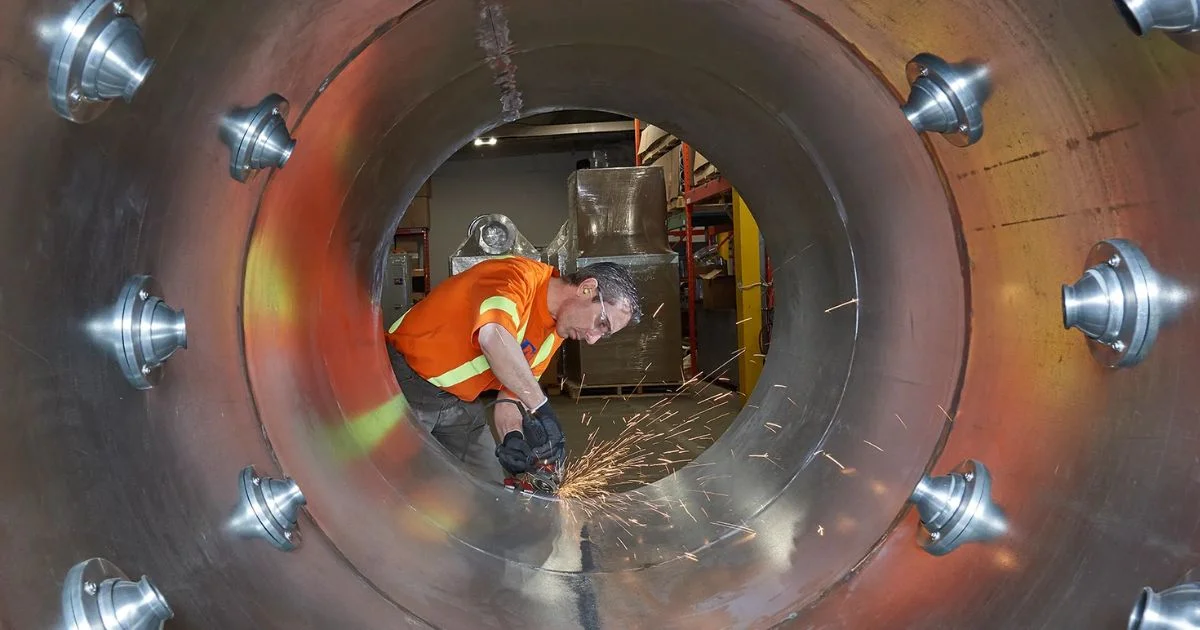
Everything is built on-site through in-house manufacturing. Custom air knife lengths from 6 inches to over 240 inches are standard production, not special orders. A dimension change doesn't generate a new purchase order. It generates a conversation between the engineer and the fabrication team down the hall.
The Installation Gap That Multi-Vendor Projects Don't Plan For
Component delivery is the milestone most project timelines track. It's not where most projects slip.
Projects slip during installation, when the drawing and the floor don't match. When a bracket needs modification. When the line geometry differs from what the facility plan showed. When an unexpected interference requires a design change nobody budgeted time for.
In a multi-vendor project, those discoveries trigger a chain of conversations across suppliers who each have their own schedules and their own scope. Days pass. Sometimes it's weeks. In a single-source project, the same team that built the system stays accountable for making it work on your floor.
Air Force 1 provides a turnkey installation with travel-ready crews that work on-site, wherever the facility is. That's not a subcontracted team handed a set of drawings. It's the people who know the system because they built it. When something needs to change during installation, the decision gets made by someone who understands the whole industrial air system, not just the part in front of them.
How Single-Source Blow Off Systems Handle Commissioning
A system that's installed isn't necessarily a system that's working. Commissioning is where performance targets get confirmed against actual production conditions, line speed, part geometry, ambient temperature, and upstream process variation. It's also where gaps between design assumptions and real conditions surface.
With a single-source approach, commissioning issues get resolved by the team that designed the system. They know what was specified, why each decision was made, and what adjustments are available. A coverage gap doesn't require a new engineering engagement with a different vendor. It requires a conversation with the team that's already on-site.
That speed matters more than it sounds. Most facilities have a fixed commissioning window, a scheduled shutdown, a line changeover, a new facility startup with a hard go-live date. Every day spent tracking down the right vendor contact is a day that doesn't come back. When one team owns the whole system, the answer is in the room.
Multi-vendor commissioning works differently. One vendor adjusts their component. The change affects another vendor's scope. That vendor needs time to assess. Meanwhile, the window is closing, and nobody has the authority to make the call. It's a slow process when the schedule demands a fast one.
Commissioning problems are easier to solve when one team owns the whole system. A coverage gap, persistent moisture, or contamination carrying through to the next operation — these get diagnosed and fixed faster when the team on-site built what they're looking at.
Energy Efficiency Is a System-Level Outcome
Blower-driven air already has a significant cost advantage over compressed air. The U.S. Department of Energy puts typical compressed air system efficiency at 10 to 15 percent, meaning roughly seven to eight horsepower of electrical input is required to deliver one horsepower of usable pneumatic power.
Compressed air systems commonly lose 20 to 30 percent of generated air through leaks before it reaches the application.
But those savings depend on a system that's matched correctly from the start. An oversized blower running against an undersized air knife doesn't capture the efficiency the design should deliver. Neither does a correctly specified system modified during installation without accounting for downstream effects.
Energy performance reflects how well every component works together, and that's only predictable when one team made every component decision. When the same engineers who sized the blower also specified the air knives and confirmed the nozzle configuration, efficiency is built into the design. When components come from separate vendors, it's assumed and rarely verified until the utility bill arrives.
Long-Term Support Starts at the Design Stage
The relationship with a single-source manufacturer doesn't end at commissioning. When a system needs modification, a line speed increase, a new part geometry, a facility reconfiguration, the team that designed and built the original system already understands what's there and what the design can accommodate.
Modifications to systems engineered as a whole are faster to spec and lower risk to implement. Modifications to systems assembled from separate vendor components require re-engineering the integration every time. You're starting from scratch on the accountability question each time something changes.
There's also the parts side. When a blower motor needs replacement or an air knife section gets damaged, sourcing the right component is straightforward when one manufacturer built the system. With multi-vendor assemblies, maintenance teams can spend significant time identifying what components they have before they can start troubleshooting.
That identification problem is more common than it sounds. Documentation gaps, discontinued part numbers, components substituted during installation — these are normal outcomes when a system comes together from multiple sources. A single-source manufacturer keeps that history in one place.
Air Force 1 offers long-term upgrade and support options, so the same team that built the system stays available as your production requirements change.
The Procurement Decision That Shapes Everything Downstream
Single-source manufacturing doesn't eliminate every variable in a project. Lead times have real constraints, and honest conversations about timelines matter at the start. What it does eliminate is the category of problem that comes from components built to individual specs being assembled into a system and expected to perform like one, and the accountability gap that opens when they don't.
That gap tends to show up during installation, during commissioning, or in the first few months of production. By that point, the procurement decision is long behind you.
The Commissioning Cost of Multi-Vendor Procurement
Most facilities find themselves thinking about vendor structure after a project runs long. A component arrives late, an integration issue surfaces on install day, or a system underperforms, and the cause isn't clear. Blow off system lead times are easy to track. The coordination risk between vendors is not. By that point , the options narrow and the cost is already absorbed.
Better conversations happen during the spec stage, when application requirements are still being defined, and the project window hasn't been locked in. That's when it's possible to assess what the custom blow off systems need, evaluate whether a single-source manufacturing approach makes sense, and get a clear read on the timeline from first drawing to commissioned system.
If your project has a fixed installation window and the blow off system is on the critical path, contact us, and our team can walk through your application, identify where coordination risks lie, and give you a straight answer on what a fully engineered, in-house manufacturing system actually entails.