
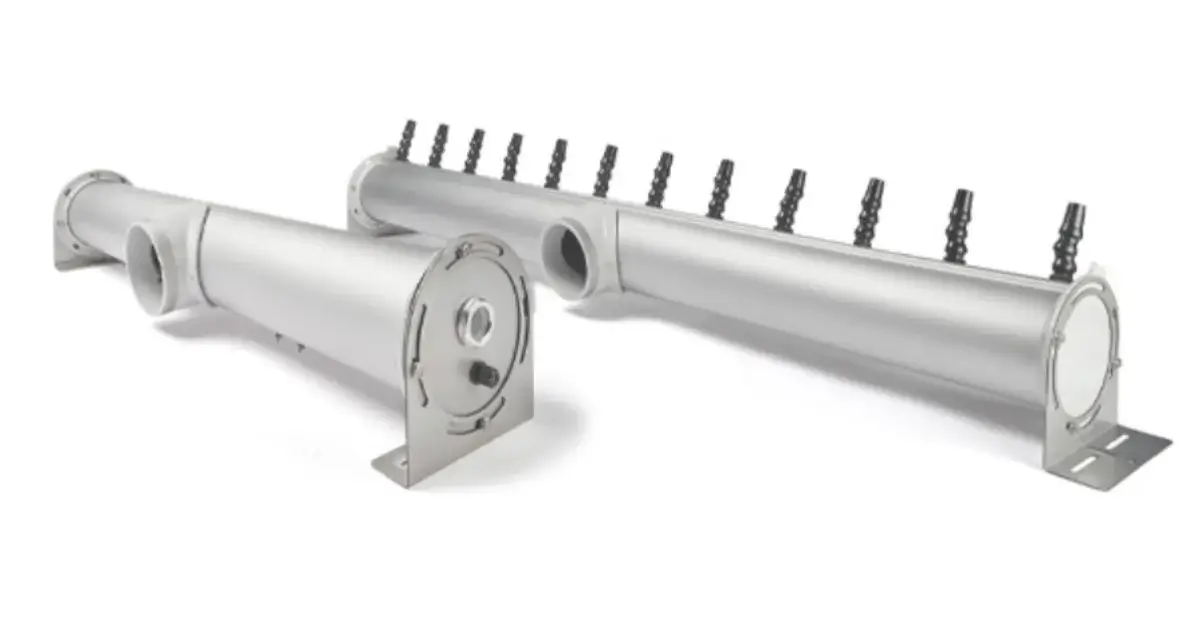
Both materials are listed as corrosion-resistant in the catalog. Both handle moisture. Both ship in standard lengths. The difference between stainless steel and anodized aluminum is not only on the spec sheet, but in how each material behaves when the environment pushes back.
Caustic washdown chemistry, acidic process runoff, chlorinated sanitizers: these are not unusual in food and pharmaceutical production. They are the daily operating conditions. And in those conditions, the two materials are not equivalent.
Getting this decision wrong does not always show up immediately. The wrong material holds together through commissioning and the first few months of production. Then it starts to degrade in ways that are hard to trace back to the housing.
By the time a facility identifies the root cause, the system has been running compromised for a while. Air knife material selection in harsh environments is worth thinking through before the purchase order. Not after the first audit finding.
How Anodized Aluminum Holds Up, And Where It Doesn't
Anodized aluminum gets its corrosion resistance from a hardened oxide layer. That layer performs well in dry manufacturing environments with no chemical exposure. It handles moisture, resists surface oxidation, and holds up under normal mechanical stress. This is why anodized aluminum air knives work reliably in general industrial applications. Automotive assembly, packaging lines, conveyor drying where the cleaning protocol is water: aluminum handles all of these.
The oxide layer has limits. It is vulnerable to strong acids, strong alkalis, and repeated exposure to chlorinated cleaners. In food processing environments, stainless steel is favored for its high resistance. Aluminum corrodes easily under the chemical demands of sanitation cycles. The failure is not sudden. The oxide layer degrades under repeated chemical contact. The aluminum beneath becomes less protected over time. By the time damage is visible, it has been developing for months.
This is why air knife material selection matters at the specification stage. A new aluminum knife looks and performs fine at commissioning. The environment does its work slowly. The degradation often gets blamed on something else before anyone examines the housing material.
Why Stainless-Steel Air Knives Hold Up Where Aluminum Doesn't
Stainless steel's corrosion resistance works differently. The protection comes from a chromium oxide passive film on the surface. When the film is damaged, it repairs itself, as long as oxygen is present. This is why stainless steel holds up under repeated washdown chemical exposure that would degrade an anodized surface over time.
The 300 series grades, 304 and 316, cover most industrial air knife applications. Grade 304 handles standard food processing environments and general washdown conditions. Grade 316 adds molybdenum, which improves resistance to chloride attack. In facilities running chlorinated sanitizers, 316 is the right choice. The grade differences are covered in detail here. For stainless steel vs aluminum air knife selection: use 316 anywhere chlorides appear in the chemistry or cleaning protocol.
Both grades are non-porous. Bacteria cannot colonize the surface the way they can in a pitted or degraded housing. This is why food and pharmaceutical equipment standards consistently point to stainless steel. The material supports the cleaning protocol rather than working against it.
When Aluminum Is the Right Specification
Aluminum is not the wrong material. It is the wrong material in the wrong environment.
In dry manufacturing processes, parts cleaning without chemical exposure, and electronics assembly, anodized aluminum performs well and costs less. The concern there is particulates and static, not washdown. The weight advantage matters in some mounting configurations. The thermal conductivity of aluminum is useful where heat dissipation from the housing is a factor.
There is also a maintenance consideration. Aluminum is easier to machine and modify than stainless steel. In facilities where air knife systems get repositioned frequently, aluminum hardware is simpler to work with. Mounting adjustments are easier too. That is a real operational advantage in the right context. That does not change the material's behavior under chemical exposure. But it is worth factoring in when the environment is genuinely dry.
The air knife material selection question is not which material is better overall. It is which material the operating environment can support over time. A food facility running daily CIP cycles with caustic chemistry needs stainless steel. Not because aluminum fails on day one, but because it fails ahead of schedule in ways that create contamination risk. A dry automotive line drying parts between machining operations does not need stainless steel. The environment does not demand it, and specifying it adds cost without adding protection.
Food And Pharmaceutical Production: When Material Selection Is a Compliance Question
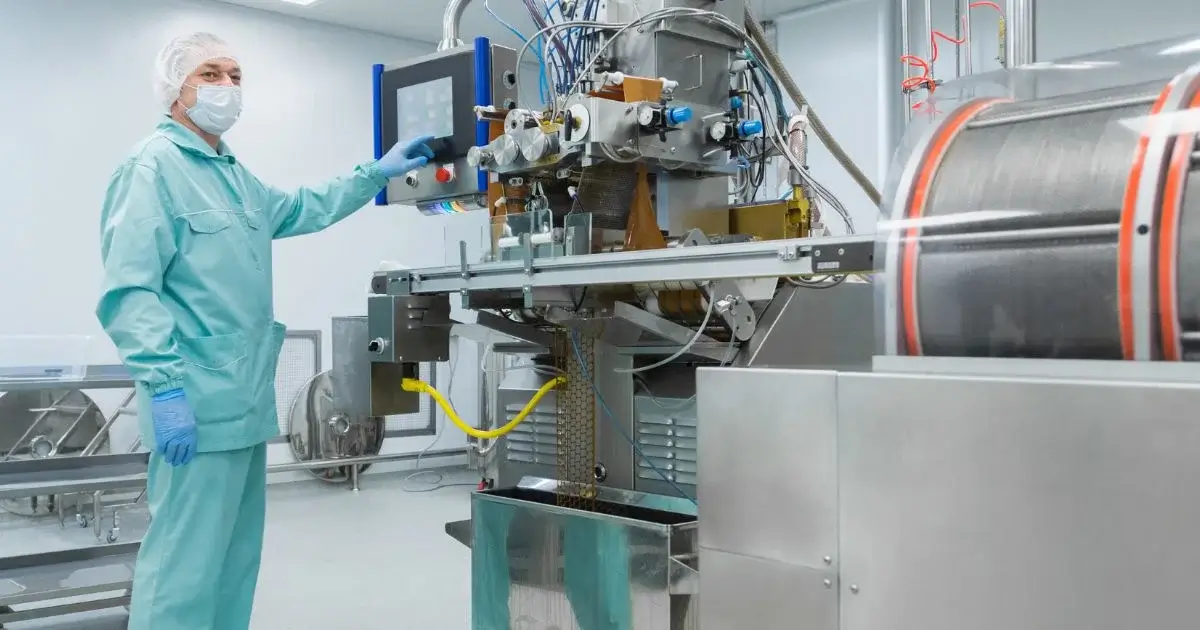
In food and pharmaceutical production, air knife material selection is not only an engineering call. It is a sanitation and compliance decision.
Food processing equipment operating near product needs to withstand the cleaning chemicals used in that facility. Those chemicals are often caustic or chlorinated. A housing that degrades under repeated chemical exposure becomes a contamination source.
Pitting and surface breakdown create areas where bacteria can establish. Visual inspection cannot confirm cleanliness in those areas. This is why guidance on food plant equipment consistently points to stainless steel in washdown zones.
Pharmaceutical manufacturing operates under Good Manufacturing Practice requirements. Equipment must be made from materials that do not react with, add to, or absorb product or cleaning agents. An air knife housing that degrades under cleaning chemistry is a GMP problem.
The food grade air knife stainless steel specification for pharmaceutical washdown applications is not a preference. It is what the regulatory framework demands. Materials must be cleanable, valid, and consistent over time. Anodized aluminum does not meet that bar in high frequency washdown conditions.
For facilities that need to demonstrate equipment compatibility with cleaning validation protocols, stainless steel is the defensible specification. Aluminum is harder to defend once a validation team asks how the housing performs under repeated caustic exposure.
Evaluating Your Environment Before Specifying a Corrosion Resistant Air Knife System
The right question before specifying an air knife material is not which material costs less at purchase. It is what the operating environment will do to the housing over a full-service life.
Start with the cleaning protocol. What chemistry does the facility use? How often? At what temperatures? If the answer involves caustic cleaners, chlorinated sanitizers, or acidic process runoff, aluminum needs to come off the list. The initial cost advantage does not hold once the housing starts to degrade. If the answer is water and mild detergent in a controlled indoor environment, aluminum is a reasonable specification.
Consider what premature material failure actually costs. In general manufacturing, a corroded air knife housing is a maintenance problem. In food or pharmaceutical production, it is a contamination risk and a potential audit finding. Early replacement, downtime, and quality failures from housing degradation tend to cost far more than the price difference between materials.
Look at line speed and throughput. Higher-volume operations run cleaning cycles more frequently. A high-throughput food facility puts far more chemical exposure on a housing than a lower-volume line does. An industrial air knife supplier with in-house fabrication capability can specify materials to match actual operating conditions. That means no defaulting to catalog options when the environment demands more.
Air knives are available in stainless steel and anodized aluminum in lengths from 6 inches to over 240 inches. The length decision and the material decision need to be made together, based on the same read of the environment. A system built to the wrong spec will underperform regardless of how well it is sized or positioned. Getting the material right is part of getting the system right.
How AF1 Approaches Material Selection for Harsh Environments
At AF1, air knife material selection starts with the application. When a facility describes its operating environment, cleaning chemistry, washdown frequency, and process temperatures, the material recommendation follows from that. Not from what is easiest to stock.
Our air knives are built in-house at our 20,000-square-foot North American manufacturing facility. For more on what in-house fabrication capability means for lead times and customization, that is covered separately. Stainless steel and anodized aluminum are both standard productions. A 316 stainless knife ships on the same timeline as an aluminum knife for a dry line. Custom lengths, custom configurations, and material selection for specific chemical environments are part of normal production. They are not exceptions requiring longer lead times or minimum order quantities.
For facilities operating in corrosive or regulated environments, getting the material right at specification matters. The right corrosion-resistant air knife system performs through its full-service life. No premature failure. No contamination risk from housing degradation. No engineering hours diagnosing a problem the right material would have prevented.
We have designed and built air knife systems for facilities running everything from mild conveyor drying to daily caustic washdowns. The operating environment shapes every material decision. When the spec is right from the start, the system earns its keep for years without incident.
Not certain your housing material matches your cleaning chemistry? Contact us. Our engineering team can assess your application and tell you what the environment demands.