
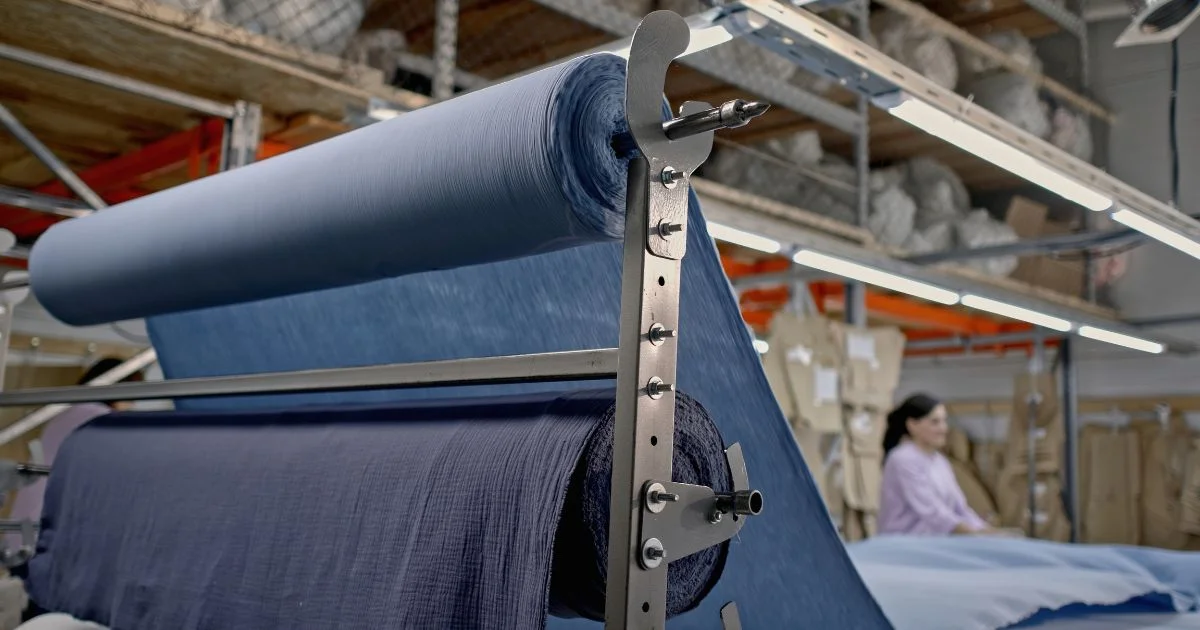
The lint comes off the line in small amounts: a little from carding, more from weaving, a steady trickle from finishing. Nobody tracks it until it's on a finished roll, or stuck to a coating that won't cure, or packed into a machinery cavity that runs warm. By then, the cause is three stations back and two shifts ago.
Textile facilities deal with contamination constantly. Most of them have some version of blow off in place. The problem isn't that they're ignoring the issue; it's that a lot of the equipment doing the work isn't built for what textile production actually throws at it. Moving air and solving the problem are two different things when the material you're cleaning is conductive, fibrous, and charged.
Why Lint Behaves Differently Than Other Contaminants
Metal shavings fall. Dust drifts. Lint clings because it's charged. Synthetic fibers like polyester and nylon build static during every phase of processing:
friction against rollers, contact with guides, tension across machinery frames. The charge accumulates because synthetic materials are poor conductors, which means it has nowhere to go once it's there.
That matters for blow off because an air system that moves lint without neutralizing the charge beneath it doesn't clean anything.
It relocates contamination. The fiber lifts off one surface and resettles somewhere else, often somewhere harder to reach. Frames, ductwork, lighting fixtures, conveyor edges. Anywhere with a surface and a charge, lint accumulates. The floor gets swept. The overhead spaces don't.
This is the core problem with lint contamination in textile manufacturing. The cleaning effort addresses what's visible. The static charge keeps pulling more material in, and the cycle repeats.
What a Textile Blow Off System Actually Needs to Do
A textile blow off system has two jobs that most facilities treat as one. The first is mechanical: remove loose fiber, dust, and debris from surfaces and products moving through the line. The second is electrical: neutralize the charge that's driving accumulation in the first place.
Most standard blow off setups handle the first part. An air knife or blower and nozzle configuration moves air, and air moves loose material. But "loose" is doing a lot of work in that sentence. Charged fibers aren't loose. They're anchored by static, and high-velocity air alone doesn't break that bond consistently.
What gets left behind is exactly the material that causes problems: the fine, electrostatically attached particles that show up later as surface defects, coating adhesion failures, or contamination in finishing chemistry.
Ionized air removes particles that plain air leaves behind. An air knife with an integrated ionizing bar floods the airstream with positive and negative ions, which neutralize the surface charge before the air moves across it. The fiber releases, The surface stays clean. Without that step, you're treating a symptom.
Static control integration isn't a premium add-on for textile. It's the feature that determines whether the system works.
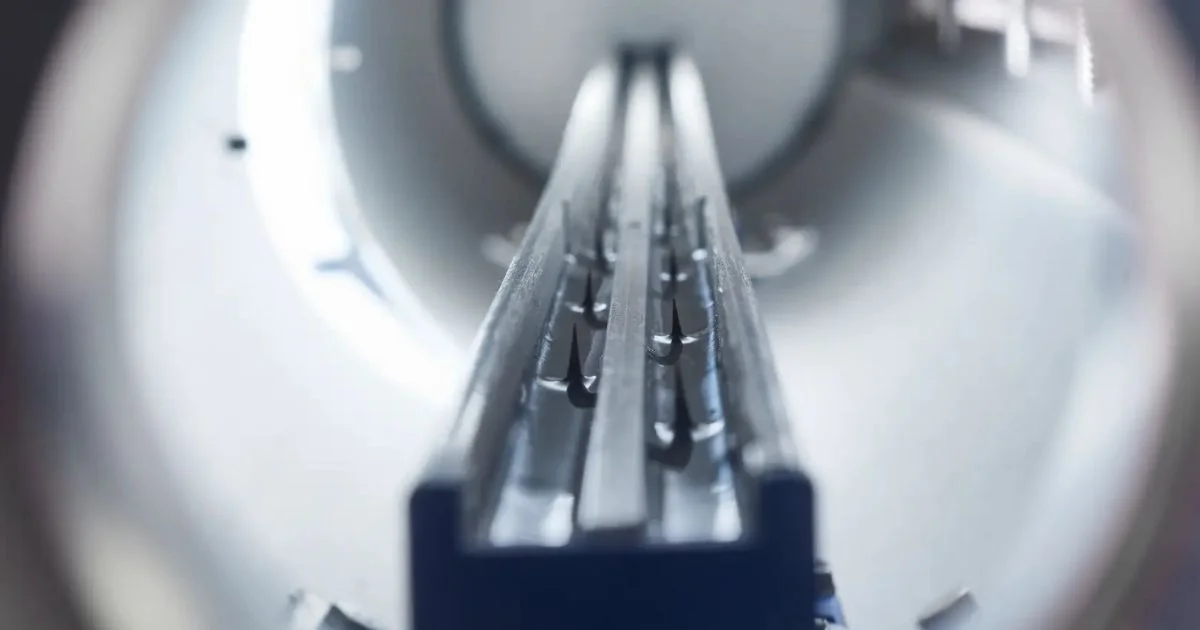
The Fire Risk That Facilities Underestimate
Lint is combustible. That's not a surprise to anyone in textile, but the practical implication often gets managed as a housekeeping issue rather than an engineering one. Carding, spinning, and weaving machines are all susceptible to ignition from friction, and lint and fluff accumulation in concealed spaces is the primary fire hazard in textile manufacturing, including ductwork, enclosed equipment, and bearing surfaces where overheating and fiber buildup meet.
A dust hazard analysis is required by NFPA standards for facilities processing combustible materials. Most textile plants conduct them. But the analysis identifies the risk. It doesn't resolve the gap in how air management equipment is spec'd.
The issue is that dust removal in a textile plant is typically managed through exhaust systems and housekeeping schedules. Those handle what settles on accessible surfaces. They don't address what charges, lifts, and resettles in hard-to-reach spaces with each production run. That accumulation is what creates the fire load, and it builds faster than most housekeeping programs account for.
Facilities processing synthetics or operating near finishing chemistry have an additional concern. Solvents and coatings in dyeing and finishing operations raise the stakes on any ignition source, including static discharge. Static control textile production measures that work upstream, before fibers reach finishing stages, reduce both contamination and risk.
Where Blow Off Fits in the Textile Production Line
Lint and dust removal in textile isn't a single-point problem. It recurs at multiple stations, and the right approach accounts for that. Carding generates significant static as fiber is separated and aligned. Static in carding, beaming, and warping causes yarn to balloon, break, and cling to rollers — production failures that are sometimes attributed to material quality when the actual cause is charge buildup that wasn't addressed.
Weaving introduces additional contamination risk as fibers are shed during high-speed operation. Finishing adds moisture, chemistry, and heat, any of which changes how contamination behaves on fabric surfaces. Wet finishing lines have a specific problem: residual moisture.
Fabric coming off a dye bath or treatment process carries water that affects downstream operations. If that moisture isn't removed before the next station, it interferes with coating adhesion, slows drying ovens, and creates conditions where the chemistry doesn't perform as intended.
Industrial air knife fabric-drying applications work well here because a continuous air sheet at the right velocity strips surface moisture without contact, without damaging delicate finishes, and without introducing heat that could affect chemistry-sensitive materials.
Drying occurs consistently across the full web width at line speed, without the variation you get with heat-only methods. Getting that step right protects the quality of every finishing process after it. An inspection step, often near the end of the line, is where lint contamination in textile manufacturing is most visible.
Fiber on a testing platform, static shock to operators handling fabric, material adhering to surfaces it shouldn't touch. By that point, the contamination was introduced much earlier. Inspection reveals the gap. Blow off at the right upstream stations closes it.
What Compressed Air Gets Wrong in Textile
Many textile plants use compressed air for spot blow off: cleaning rollers, clearing nozzles, and removing visible debris from specific points on the line. It works for that. The problem is that compressed air is expensive per unit of airflow, and in textiles, you're not spot-cleaning. You're running continuous contamination removal across a moving web of material at line speed.
Compressed air systems commonly lose 20 to 30 percent of generated air through leaks in fittings and lines. That waste compounds in a textile environment where the demand is continuous. Blower-driven air covers the same application at significantly lower operating cost, and in a facility running multiple shifts across wide fabric widths, the savings add up fast.
There's also the question of consistency. A compressed air system tied to a plant header shares pressure with all downstream uses. Line pressure varies. When it drops, coverage drops with it, and contamination that should have been cleared gets carried downstream. A dedicated blower system delivers consistent airflow independent of other plant operations.
Choosing Equipment That Matches the Environment
Textile plants aren't all the same, and the contamination profiles vary significantly. A nonwovens facility running polypropylene faces different static behavior than a cotton weaving operation. A plant processing flame-retardant fabrics with finishing chemistry has different safety requirements than one running dry natural fiber goods.
The spec decisions that matter: whether static control integration is built into the air knife or added as a retrofit, whether the blower drive configuration matches the facility's maintenance profile, and whether the materials in contact with product are appropriate for the finishing chemistry in use.
Stainless steel construction handles wet and chemical environments. Anodized aluminum works well in dry applications. Non-sparking blower equipment is the right call in areas with combustible fiber accumulation or solvent exposure.
Air knife length matters too. Textile lines run wide. An air knife that doesn't span the full web width leaves edges unaddressed, and edges are where lint accumulates first.
The Problem That Persists When Equipment Is Undersized
Facilities sometimes spec blow off equipment based on what's available or what's familiar rather than what the application needs. An air knife too short for the web. A blower not sized for the airflow the coverage requires. A system without ionization in an environment where static is the primary driver of contamination.
The result is partial performance. The system runs, something gets cleaned, and the problem doesn't fully resolve. That's a harder situation than having no system at all, because the partial fix tends to absorb the maintenance and capital budget that would have gone toward solving the problem correctly.
Dust removal in a textile plant that doesn't account for static charge is doing half the job. The other half is the part that determines whether defects keep showing up, whether fire risk stays managed, and whether the cleaning effect holds from one production run to the next.
If your current setup is leaving contamination behind or lint keeps showing up where it shouldn't, contact us and our team can assess what's actually happening on the line and where the gaps are.